
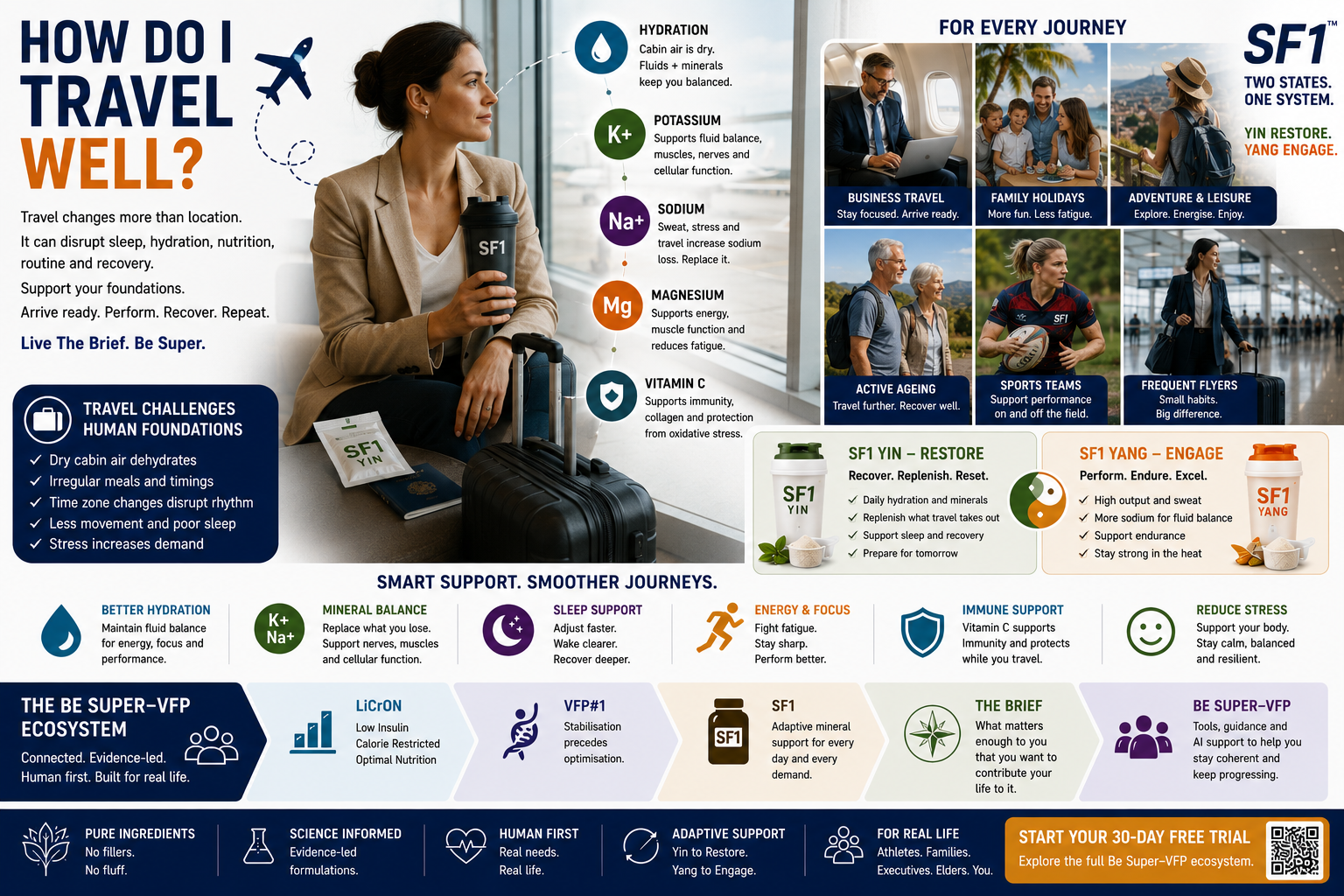
How Do I Travel Well?
Travel Changes More Than Location
Most people think travel is about moving from one place to another.
The body experiences something different.
Travel often changes:
- sleep
- hydration
- nutrition
- routine
- movement
- recovery
- stress levels
Many people notice the effects without understanding the cause.
They simply say:
“I always feel off when I travel.”
The question is why.
Travel Disrupts Rhythm
The body likes rhythm.
Regular:
- sleep
- meals
- hydration
- activity
help support stability.
Travel often disrupts all of them simultaneously.
Long drives
Long periods without anything to drink or eat
Long focus times drain minerals
Early departures.
Late arrivals.
Different meal times.
Different beds.
Different climates.
Different schedules.
This is why travel frequently feels more exhausting than expected.
Air Travel Is Dehydrating
One of the least understood aspects of travel is hydration.
Aircraft cabins typically operate with very low humidity.
This means travellers often lose fluid more quickly than they realise.
Common travel experiences include:
- dry mouth
- headaches
- fatigue
- poor concentration
- feeling sluggish
Many people blame flying.
Often the issue is partly hydration and mineral balance.
Hydration Is More Than Water
Water matters.
But hydration is not simply about water.
Hydration depends upon:
- fluids
- minerals
- cellular balance
Particularly:
Potassium
Sodium
Magnesium
These minerals help support:
- fluid regulation
- nerve signalling
- muscle function
- cellular communication
Travel frequently increases the importance of all four.
Why The Potassium-Sodium Relationship Matters During Travel
One of the most important systems in the body is the sodium-potassium pump.
This mechanism helps regulate:
- hydration
- cellular communication
- nerve function
- muscular function
Travel often combines:
- dehydration
- altered eating patterns
- reduced movement
- disrupted rhythm
which may place additional pressure on this relationship.
The body generally requires considerably more potassium than sodium.
This is one reason Potassium Gluconate forms a major part of SF1 architecture.
Why Magnesium Matters During Travel
Travel can be surprisingly demanding.
Long journeys.
Busy schedules.
Different environments.
Reduced sleep.
Magnesium contributes to:
- nervous-system function
- energy metabolism
- reduction of tiredness and fatigue
- psychological function
Many travellers focus entirely on logistics.
The body is focused on adaptation.
Why Vitamin C Matters
Travel often places additional demands on the body.
Vitamin C contributes to:
- immune-system function
- collagen formation
- energy metabolism
- protection of cells from oxidative stress
SF1 uses Camu Camu as a natural whole-food source of Vitamin C because support should be built around an integrated system rather than isolated ingredients.
Travel Is A Human Foundation Challenge
Travel influences almost every foundation simultaneously.
Sleep
Different environments.
Hydration
Different routines.
Nutrition
Different food choices.
Recovery
Reduced opportunities.
Rhythm
Disrupted schedules.
Many people think they need more willpower when travelling.
Often they simply need better support.
What LiCrON Teaches About Travel
LiCrON stands for Low Insulin Calorie Restricted Optimal Nutrition.
LiCrON recognises that modern life constantly changes demands.
Travel is a perfect example.
Travel often encourages:
- irregular eating
- convenience food
- blood sugar swings
- reduced consistency
LiCrON seeks to support:
- nutritional quality
- insulin stability
- metabolic flexibility
- biological resilience
The goal is not perfection.
The goal is adaptability.
What VFP#1 Teaches About Travel
VFP#1 begins with Human Foundations.
When people travel they often focus on:
- tickets
- hotels
- meetings
- schedules
while neglecting:
- hydration
- minerals
- sleep
- recovery
Yet these foundations frequently determine how the trip actually feels.
VFP#1 teaches:
Stabilisation precedes optimisation.
This remains true whether you’re at home or crossing continents.
Why SF1 Exists
Most products solve a category.
Travel affects multiple categories simultaneously.
Hydration.
Energy.
Recovery.
Participation.
SF1 was designed to support the foundations beneath all of them.
This is why SF1 exists as:
SF1 Yin — Restore
For:
- replenishment
- regulation
- recovery
- preparation
SF1 Yang — Engage
For:
- activity
- heat
- output
- sweat
One System.
Two States.
Different support for different demands.
Why Travel Matters To The Brief
Most people do not travel simply to travel.
They travel because something matters.
Work.
Family.
Adventure.
Contribution.
Opportunity.
Responsibility.
Purpose.
This is The Brief.
What matters enough to you that you want to contribute your life to it?
Travel often places pressure on the foundations that support participation.
The stronger those foundations, the easier it becomes to remain present for what matters.
The Bigger Question
If travel disrupts rhythm…
and rhythm influences participation…
what happens when life becomes intensely busy for extended periods?
How do we maintain capacity when demands continue to increase?
That leads naturally to:
How Do I Maintain Momentum During Busy Periods?
Explore Further
Buy or Explore SF1
https://superfoods4u.co.uk/sf1-buy/
SF1 Home
Human Foundations Knowledge Hub
https://superfoods4u.co.uk/explore-sf1-knowledge-hub/
Explore The Brief
Start Your Be Super-VFP Free Trial
Don’t seek to be better.
Be Super.
Support your foundations.
Travel well.
Stay present.
Support what matters.
Live The Brief.